

The Science of Sleep Entrainment: How Delta Waves Combat Insomnia
The Science of Sleep Entrainment: How Delta Waves Combat Insomnia
Sleep is not merely a passive state of inactivity; it is a highly active, complex neurological sequence essential for survival. During sleep, your brain consolidates memories, clears out metabolic waste (via the glymphatic system), and repairs cellular damage.
Yet, millions of people worldwide struggle with chronic insomnia, sleep fragmentation, and poor sleep quality. While many turn to pharmaceutical sleep aids—which often disrupt natural sleep architecture and cause dependency—modern neuroscience offers a non-invasive, drug-free alternative: sleep entrainment via Delta wave frequencies.
Why It Matters: The Insomnia Epidemic
When you struggle to fall asleep or wake up repeatedly during the night, your brain is unable to spend enough time in deep, slow-wave sleep (SWS). SWS is the most restorative phase of the sleep cycle. Depriving your brain of SWS leads to next-day brain fog, chronic fatigue, elevated cortisol levels, and weakened immune function.
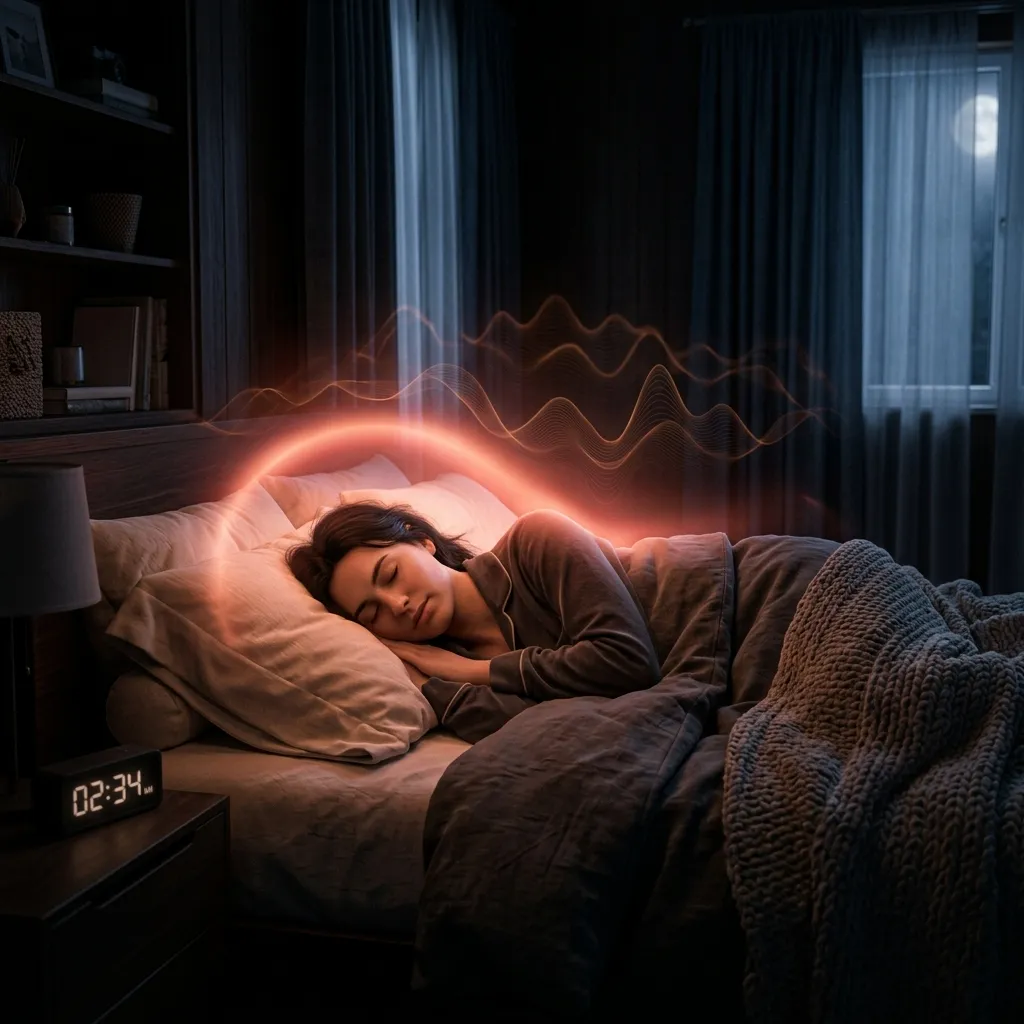
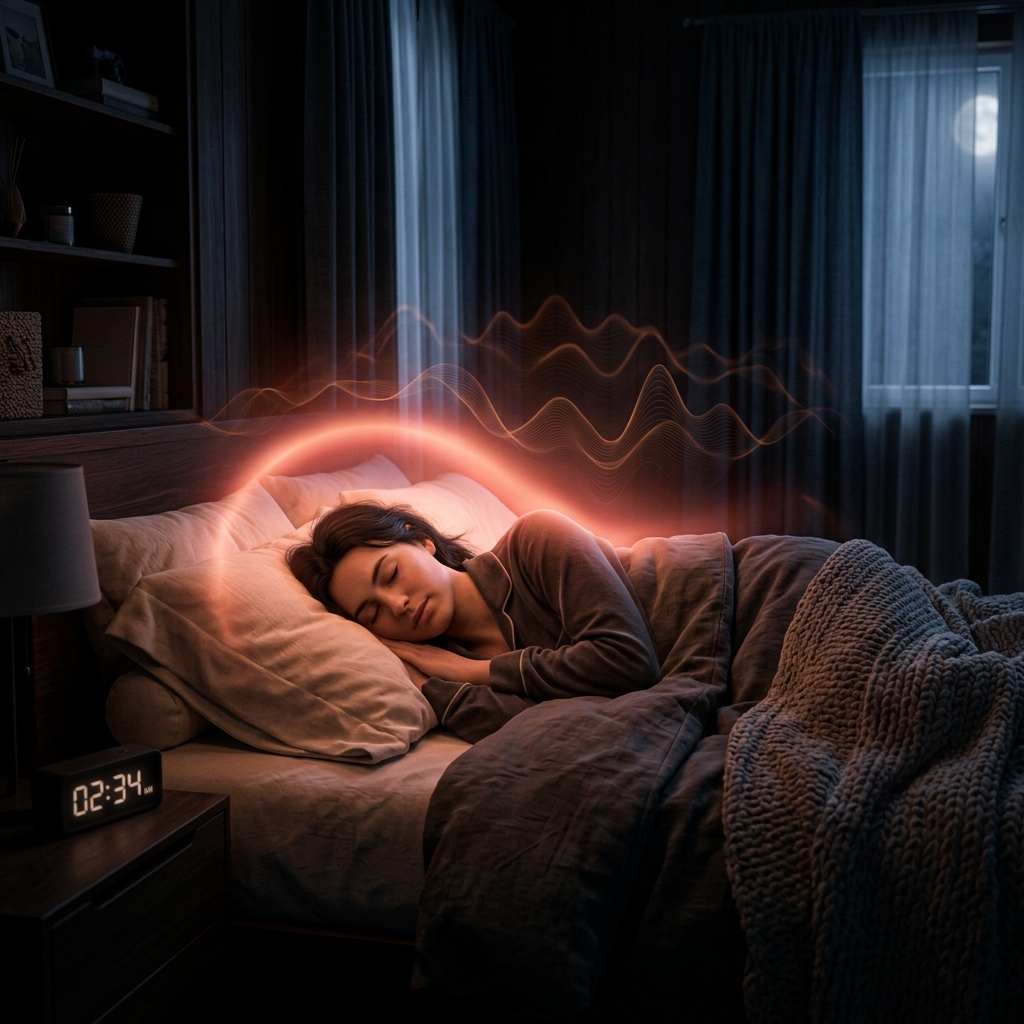
Sleep entrainment uses external auditory and visual frequencies to gently guide the brain’s electrical activity away from high-beta (stress) states and stabilize it in the delta frequency band—the state of deep sleep.
The Neurological Mechanism: Deep Sleep and the Thalamocortical Loop
To understand how sleep entrainment works, we must look at how the brain transitions into unconsciousness:
1. The Sleep Cycle Architecture
A healthy night of sleep consists of repeating 90-minute cycles divided into Non-Rapid Eye Movement (NREM) and Rapid Eye Movement (REM) sleep:
- NREM Stage 1 (N1): Light sleep, transitioning from Alpha to Theta waves.
- NREM Stage 2 (N2): Deeper sleep, marked by sleep spindles and K-complexes.
- NREM Stage 3 (N3 - Slow-Wave Sleep): The deepest, most restorative sleep, dominated by high-amplitude, low-frequency Delta waves (0.5 – 4 Hz).
- REM Sleep: High-frequency, active brain activity associated with vivid dreaming.
2. The Thalamocortical Loop
The thalamus acts as the brain’s sensory switchboard, routing sights, sounds, and touch to the cerebral cortex. When you fall asleep, the thalamocortical loop begins to fire in slow, synchronized bursts. This synchronization blocks external sensory inputs from reaching the cortex, allowing the brain to enter a state of deep, undisturbed rest.
3. Auditory Entrainment for Delta Generation
When you listen to binaural beats with a Delta frequency difference (e.g., left ear: 100 Hz, right ear: 102.5 Hz, resulting in a 2.5 Hz beat), the brain’s Frequency Following Response encourages the thalamocortical loop to synchronize at that 2.5 Hz rate. This helps initiate and sustain Stage 3 slow-wave sleep.
The Sleep Entrainment Pathway:
- External Auditory Input (Delta Binaural Beat: ~2 Hz) ↓
- Auditory Pathway (Brainstem) ↓
- Thalamocortical Loop Synchronization ↓
- Sensory Gate Closed (Thalamus blocks external noise) ↓
- Induction of Stage 3 NREM (Slow-Wave Deep Sleep)
How to Apply Sleep Entrainment: A Two-Step Method
To optimize your sleep using auditory entrainment, we recommend a dual approach:
Step 1: Pre-Sleep Wind-Down (15 – 30 Minutes Before Bed)
- Goal: De-excite the nervous system.
- Frequencies: Use Alpha (8–12 Hz) or Theta (4–8 Hz) sessions.
- Visuals: Focus on slow, rhythmic visual patterns in Mistikist. Ensure the screen brightness is low, and avoid blue light by selecting warm red or amber color palettes, which encourage the natural secretion of melatonin.
Step 2: In-Bed Entrainment (During Sleep Preparation)
- Goal: Transition into deep sleep.
- Frequencies: Use Delta (0.5–4 Hz) sessions.
- Audio: Play the session through comfortable sleep-friendly headphones (such as headband headphones) or a low-volume bedside sound system. Let the audio play as you drift off.
Safety Guidelines & Claims Disclaimer
Delta wave sleep entrainment is a safe, non-invasive method to support healthy sleep habits. It is not a medical treatment for clinical sleep disorders such as obstructive sleep apnea, narcolepsy, or chronic medical insomnia. If you experience persistent, long-term sleep issues, consult a certified sleep specialist.
Frequently Asked Questions
Can I listen to sleep entrainment audio without headphones?
While headphones are required for the precise binaural beat illusion, playing Delta frequencies through standard room speakers still provides a calming background rhythm that helps quiet the mind. For maximum entrainment, sleep headbands are highly recommended.
Will sleep entrainment make me feel groggy in the morning?
No. Unlike sleeping pills, which disrupt your natural sleep architecture and leave chemical residues in the body, sleep entrainment simply supports your brain’s natural biological rhythms, leaving you feeling refreshed.
How does blue light affect my sleep sessions?
Blue light blocks melatonin production, keeping your brain in a daytime state. If you watch visuals in Mistikist before bed, always use warm/red light filters and low brightness.
Related Reading
- The Neuroscience of Binaural Beats
- What is Brainwave Entrainment?
- Sound and Light Frequencies: How Mistikist Works
Want to reprogram your subconscious mind, reduce anxiety, and unlock peak focus? Download the Mistikist App on iOS or Android, or select a plan on our Pricing Page to start your 7-day free trial.
About Mistikist
Mistikist is an AI-assisted neuro-regulation and mind programming platform helping individuals and B2B teams prevent burnout, recover active focus, and regulate stress in minutes.