

The Neuroscience of Binaural Beats: How Frequency Entrainment Rewires Your Brain
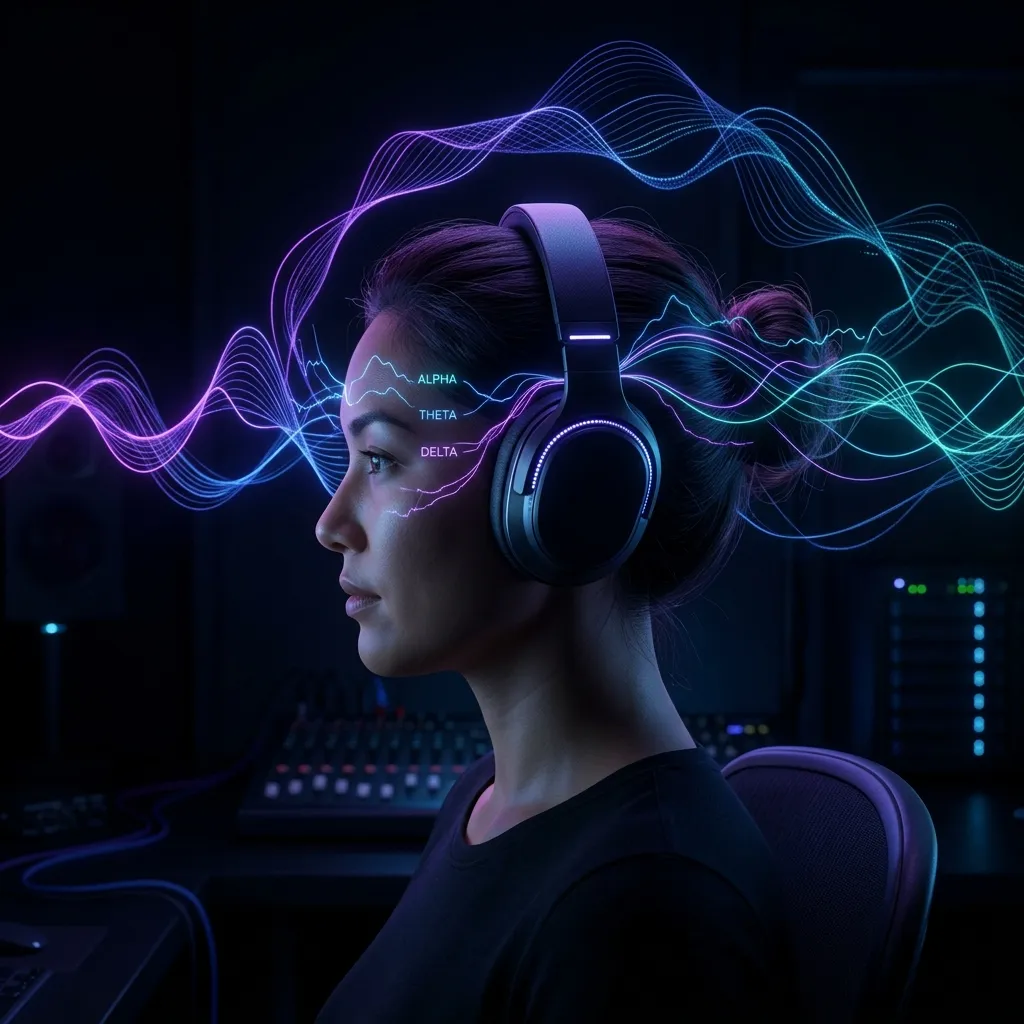
The Neuroscience of Binaural Beats: How Frequency Entrainment Rewires Your Brain
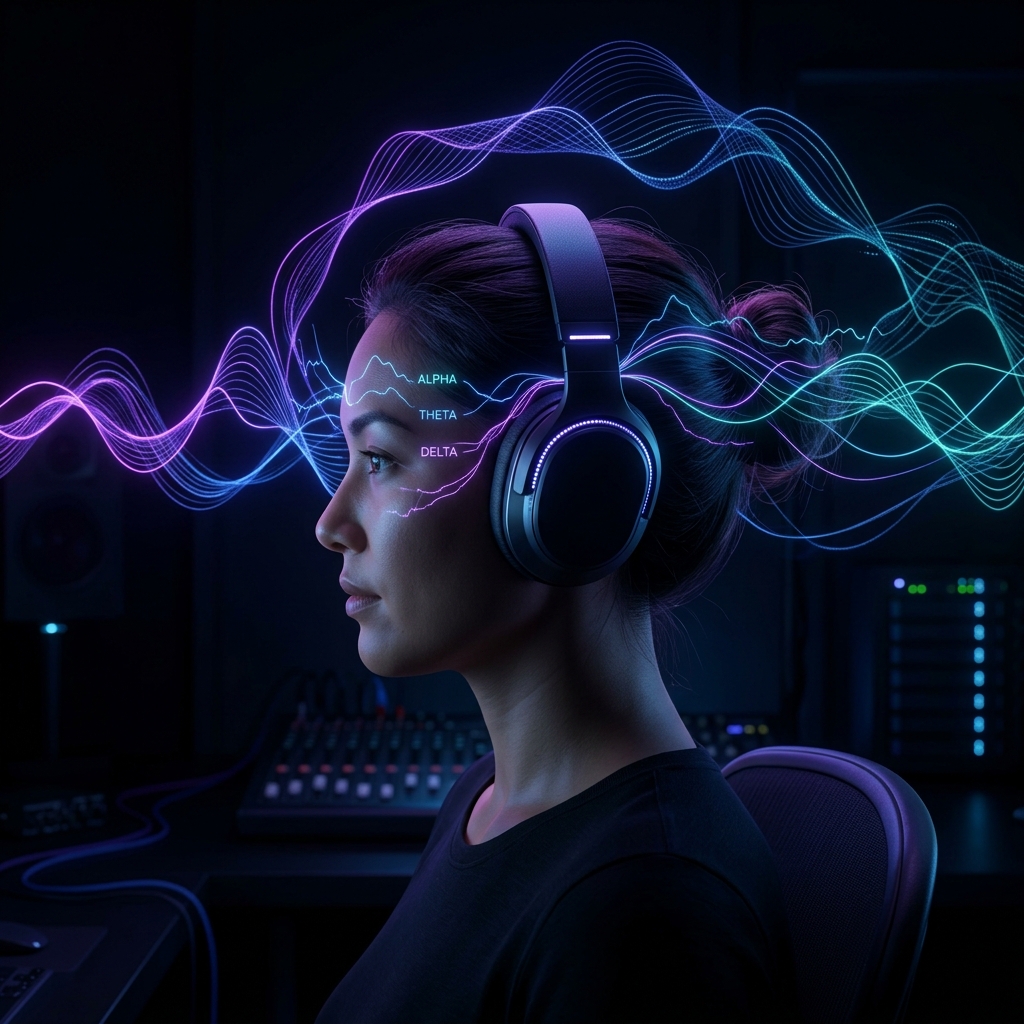
A binaural beat is a fascinating cognitive illusion created by your brain when you listen to two tones with slightly different frequencies at the same time through headphones. For example, if you feed a 200 Hz tone into your left ear and a 210 Hz tone into your right ear, your brain does not hear two separate tones. Instead, it perceives a third, rhythmic frequency pulsing at exactly 10 Hz—the mathematical difference between the two inputs.
This phenomenon is not magic; it is a predictable neural response that we can leverage for stress relief, cognitive enhancement, and sleep preparation.
Why It Matters: Beyond Pseudoscience
Many wellness tools present sound therapy as an esoteric mystery. At Mistikist, we believe in stripping away the pseudoscience to focus on the biological reality. Binaural beats are a verified method of auditory entrainment—a process where the brain’s electrical activity syncs with an external rhythmic stimulus.
By utilizing specific frequencies, we can encourage the brain to transition away from high-stress alert states and move into states optimized for deep work, creative flow, or restorative sleep.
The Neurological Mechanism: The Superior Olivary Nucleus
The creation of a binaural beat takes place in the superior olivary nucleus (SON), a specialized structure in the brainstem that is part of the auditory pathway. The SON is responsible for sound localization—calculating where a sound is coming from by comparing the timing and volume differences between your ears.
When the SON receives two mismatched frequencies, it attempts to reconcile them. The result is the perception of a phantom “beat.”
Once this beat is established:
- Cortical Synchronization: The auditory cortex begins firing in phase with the frequency of the beat (e.g., 10 Hz).
- Frequency Following Response (FFR): This electrical activity spreads across the cortex, recruiting other neural networks to resonate at the target frequency.
- Neuromodulation: Depending on the frequency, this synchronization downregulates the sympathetic nervous system (fight-or-flight) and promotes parasympathetic dominance, lowering cortisol levels and blood pressure.
The Auditory Entrainment Pathway:
- Step 1: Stereo Input
- Left Ear: 200 Hz Tone
- Right Ear: 210 Hz Tone
- Step 2: Processing in the Brainstem
- Superior Olivary Nucleus processes and reconciles the phase difference.
- Step 3: Perception of the Beat
- A phantom 10 Hz beat is perceived internally by the listener.
- Step 4: Cortical Synchronization
- The auditory cortex begins firing in phase with the 10 Hz frequency.
- Step 5: Frequency Following Response
- Cortical networks synchronize across the whole brain.
- Step 6: Neuromodulation
- Lowered cortisol, reduced stress, and autonomic nervous system regulation.
The Brainwave Spectrum and Mental States
By adjusting the difference between the two tones, we can target different brainwave bands:
- Delta (0.5 – 4 Hz): Deep, dreamless sleep, pain relief, and physical healing.
- Theta (4 – 8 Hz): Subconscious access, deep meditation, hypnagogia, and creative ideation.
- Alpha (8 – 12 Hz): Relaxed alertness, stress reduction, and positive visualization.
- Beta (12 – 30 Hz): Active thinking, analytical processing, and logical problem-solving.
- Gamma (30 – 100 Hz): Peak concentration, memory consolidation, and high-level cognitive processing.
How to Use Mistikist for Binaural Beats
To get the most out of binaural beat sessions, it is important to follow a structured approach:
- Wear Stereo Headphones: Because binaural beats rely on feeding different frequencies to each ear, they cannot be created using normal speakers. High-quality stereo headphones are mandatory.
- Activate Dual Entrainment: While auditory entrainment is powerful, combining it with visual stimuli yields significantly faster results. Mistikist integrates binaural beats with customized photic driving (optical entrainment) via generative visual fractals and light frequencies. This dual-sensory approach accelerates the brain’s transition to the target frequency.
- Choose the Right Environment: Find a comfortable space free from external distractions, dim the lights, and set the volume to a comfortable, moderate level.
Safety Guidelines & Claims Disclaimer
Mistikist session audios are designed to support mental wellness, relaxation, and cognitive focus. They are not a replacement for medical diagnosis or treatment. Do not listen to binaural beats while driving, operating heavy machinery, or performing any task that requires absolute alertness. Individuals prone to seizures, epilepsy, or severe cardiac conditions should consult a physician before using visual or auditory entrainment tools.
Frequently Asked Questions
How long should I listen to binaural beats?
For most users, a 10 to 20-minute session is sufficient for the brain to achieve stable entrainment. However, longer sessions are perfectly safe and can be used for extended study periods or sleep preparation.
Can I listen to binaural beats without headphones?
No. Without headphones, the sound waves mix in the air before reaching your ears, preventing the superior olivary nucleus from creating the binaural beat illusion.
How quickly will I feel the effects?
Most users notice a shift in their state of mind within 5 to 8 minutes as the Frequency Following Response establishes cortical synchronization.
Related Reading
- What is Brainwave Entrainment?
- Sound and Light Frequencies: How Mistikist Works
- The Science of Sleep Entrainment
Want to reprogram your subconscious mind, reduce anxiety, and unlock peak focus? Download the Mistikist App on iOS or Android, or select a plan on our Pricing Page to start your 7-day free trial.
About Mistikist
Mistikist is an AI-assisted neuro-regulation and mind programming platform helping individuals and B2B teams prevent burnout, recover active focus, and regulate stress in minutes.