
In this article
In this article, we will dive into Physics Before Philosophy: Why Everything Oscillates and The Human Perception Window: Visible Light and Audible Sound and explore what researchers have discovered about reshaping your subconscious mind. Explore the physics and neuroscience of frequency: Nikola Tesla, visible light, audible sound, 4-8 Hz theta subconscious rewiring, 0.1 Hz heart-brain coherence, and epigenetics.
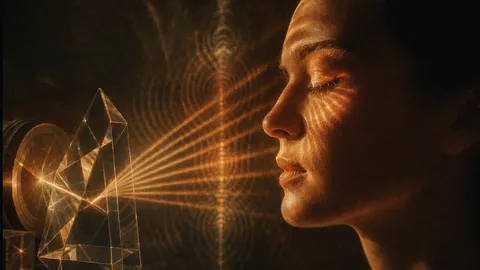
When Nikola Tesla remarked that understanding the universe requires thinking in terms of energy, frequency, and vibration, he was not speaking as a mystic borrowing poetry from philosophy. He was summarizing electrodynamics. Every solid object you can touch, every ray of sunlight hitting your retina, every word spoken across a room, and every electrical impulse firing across your eighty-six billion neurons is rhythmic oscillation measured in cycles per second—Hertz (Hz).
Yet when modern conversations proclaim that “everything is frequency,” they often stop at an inspiring slogan and skip the practical engineering question: if your body and mind already run on measurable oscillatory frequencies, how do you deliberately tune them tomorrow morning?
Bridging that gap requires leaving vague slogans behind and stepping into biophysics and cognitive neuroscience. Across electromagnetic optics, acoustic psychophysics, electroencephalography (EEG), cardiovascular resonance, and behavioral epigenetics, scientists now map with remarkable precision how external rhythms of light, sound, and breath translate into internal shifts in stress, focus, cellular signaling, and subconscious mind programming.
1. Physics Before Philosophy: Why Everything Oscillates
At the subatomic scale, matter is never truly static. Atoms inside solid bone, liquid blood, and cortical tissue vibrate continuously around equilibrium positions at frequencies on the order of 10¹² to 10¹³ Hz (terahertz thermal lattice oscillations) due to thermal and quantum zero-point energy. Above the molecular level, biology organizes itself around nested biological clocks:
- Ion channel gating & action potentials synchronize neural populations at millisecond rhythms (
0.5 Hzto100+ Hz). - Sinus node pacemakers & autonomic baroreceptors regulate cardiovascular oscillations near
0.1 Hzand1 Hz. - Hypothalamic circadian oscillators lock cellular metabolism and hormone release to Earth’s 24-hour light-dark cycle.
In physics, when one oscillating system transfers rhythmic energy to another, matching or locking its phase, the phenomenon is called entrainment. Your nervous system is an open resonant receiver: it continuously entrains to ambient lighting, acoustic patterns, respiratory cadence, and internal emotional loops—whether you choose those inputs consciously or absorb them by accident.
2. The Human Perception Window: Visible Light and Audible Sound
One of the humbling realities of sensory biology is how thin a slice of physical reality our unaided senses actually sample. Both visible light and audible sound occupy narrow bandwidths inside vast physical spectra—yet those two windows act as the primary high-speed gateways into brain regulation.
| Frequency Domain | Full Physical Span | Human Sensory Window | Primary Neural Transducer | Role in Mind Regulation |
|---|---|---|---|---|
| Electromagnetic Light | Radio (kHz) to Gamma Rays (>10¹⁹ Hz) |
Visible Light (~380–700 nm, 430–770 THz) |
Retinal cones, rods & melanopsin ipRGCs → LGN & SCN | Visual cortex (~30% of cortex), circadian melatonin, attention anchoring |
| Mechanical Sound Waves | Infrasound (<20 Hz) to Ultrasound (>20 kHz) |
Audible Sound (20 Hz – 20,000 Hz) |
Cochlea → Superior Olivary Complex (SOC) → Auditory Cortex (A1) |
Frequency-Following Response (FFR), emotional tone, autonomous safety cues |
| Cardiac-Respiratory Rhythm | Millihertz hormonal tides to arterial pulse | Coherent Breath (~0.1 Hz, ~6 breaths/min) |
Vagus nerve afferents & baroreceptors → Medulla & Amygdala | Heart Rate Variability (HRV) amplitude, vagal braking, stress recovery |
| Cortical EEG Oscillations | Slow DC cortical potentials to high-frequency spikes | Macro Brainwaves (0.5 – 69 Hz) |
Thalamocortical feedback loops across all lobes | Conscious state transitions: deep sleep, Theta programming, Alpha calm, Gamma flow |
How Light and Sound Translate Into Brainwaves
Notice an acoustic paradox: you cannot physically hear a pure 6 Hz tone from an open speaker, because human eardrums only register air vibrations above 20 Hz. Nor do human eyes directly read cortical voltage.
Instead, the brain generates macro brainwaves internally through Frequency-Following Response (FFR) and Audio-Visual Entrainment (AVE):
- Auditory Phase Locking: When stereo headphones deliver
200 Hzto the left ear and206 Hzto the right ear (binaural beats), or rhythmic amplitude-modulated acoustic pulses (isochronic tones & monaural beats), brainstem neurons in the Superior Olivary Complex resolve the phase difference and pulse at the exact6 Hztarget frequency, propagating that cadence upward into the thalamus and neocortex. - Optical Kinetic Anchoring: Because the visual cortex consumes roughly 30% of cortical processing bandwidth, closing your eyes during stress often lets unchecked anxious imagery loop freely. Engaging eyes-open, rhythmically evolving sacred-geometry fractals and calibrated color wavelengths occupies V1–V4 visual association areas, quieting rapid anxious eye saccades and accelerating cortical synchronization compared to audio alone.
3. Brainwaves and the Subconscious Mind Gate (4–8 Hz Theta)
Your conscious waking mind—anchored in the prefrontal cortex—processes roughly 40 to 50 bits of information per second. Meanwhile, subconscious neural networks spanning the basal ganglia, limbic structures, and autonomic pathways coordinate roughly 11 million bits per second, governing up to 95% of daily emotional reflexes, habits, and automatic self-talk.
Attempting to overwrite an entrenched emotional pattern exclusively with daytime willpower (18–28 Hz High-Beta) regularly hits what neuroscientists and clinical hypnotherapists observe as the Analytical Mind Barrier. When you repeat an unfamiliar empowering statement while firing in analytical Beta, the anterior cingulate cortex (ACC) immediately detects a mismatch against stored emotional memory and triggers internal skepticism—inadvertently reinforcing the old neural loop.
| EEG Band | Frequency Range | Dominant Functional State | Everyday Frequency & Conscious Access |
|---|---|---|---|
| Delta | 0.5 – 4 Hz |
Deep dreamless slow-wave sleep, glymphatic maintenance, tissue repair | Minimal conscious recall; foundational nocturnal recovery |
| Theta | 4 – 8 Hz |
Hypnagogic imagery, subconscious plasticity, emotional memory reconsolidation | Early childhood baseline (ages 0–7), waking twilight edge, optimal subconscious programming window |
| Alpha | 8 – 12 Hz |
Relaxed wakefulness, parasympathetic transition, creative assimilation | Quiet bridge between external thinking and internal imagery (10 Hz focus calm) |
| Beta | 12 – 30 Hz |
Active analysis, external execution; High-Beta (>20 Hz) fuels vigilance & rumination |
Dominant modern workday frequency |
| Gamma | 30 – 69 Hz |
Cross-cortical binding (40 Hz), insight peaks, elevated clarity & memory recall |
Peak integration during lucid focus and elevated emotional coherence |
Why Subconscious Reprogramming Works in Theta Plus Elevated Emotion
To reshape subconscious wiring cleanly, two neurobiological ingredients must coincide:
- Descending Through
4–8 HzTheta (Including6 HzMidline Theta &7.83 HzSchumann Bridge): As cortical arousal drops from defensive High-Beta into Theta, critical DMN (Default Mode Network) filtering softens. In this receptive window, vivid mental rehearsal activates overlapping motor and prefrontal circuits as if a future action were already experienced physically—laying down preparatory synaptic scaffolding (“neurons that fire together wire together”). - Acoustic Safety & The Self-Voice Effect: Research in auditory self-recognition shows the brain routes recordings of your own voice differently from an external stranger’s narration. Recognizing harmonic overtones of “Self” bypasses social-persuasion skepticism. When own-voice present-tense statements are layered gently over 6 Hz Theta audio-visual entrainment and elevated emotional resonance (gratitude, relief, grounded certainty), limbic emotional tagging locks the new pattern directly into procedural memory.
4. Belief, Perception, and Epigenetic Biology
One of the deepest shifts in twenty-first-century biology came from moving beyond strict genetic determinism. While your structural DNA sequence remains largely fixed throughout life, epigenetics demonstrates that genes operate more like dynamic switches controlled by environmental signals than rigid destiny.
What delivers those signals to the cell membrane and nucleus? Neurochemistry translated from your perception of the world.
- When chronic mental rehearsal centers on urgency, scarcity, or interpersonal threat, the HPA axis saturates tissues with cortisol, adrenaline, and pro-inflammatory cytokines. Over time, stress-response signaling biases cellular metabolism toward survival defense—narrowing immune resilience, disrupting digestion, and fragmenting sleep architecture.
- Conversely, when rhythmic breathwork, calm acoustic coherence, and restructured internal beliefs downshift the autonomic nervous system into ventral vagal safety, systemic nitric oxide, acetylcholine, oxytocin, and neurotrophic factors (BDNF) rise—supporting neuroplastic repair and healthier gene expression dynamics.
Changing a deep subconscious belief is therefore never “mere positive thinking.” Because emotional perception dictates hormonal chemistry, changing what your nervous system treats as true fundamentally alters the biochemical signals bathed across every cell in your body.
5. Heart-Brain Coherence and 0.1 Hz Resonance Breathwork
Popular psychology often treats the brain as a solitary commander issuing orders downward to passive organs. Modern neurocardiology reveals a continuous two-way dialogue in which the heart sends significantly more ascending neural information upward to the brain—via the vagus nerve and spinal pathways into the medulla, thalamus, and amygdala—than it receives back downward.
Under fragmented stress, beat-to-beat heart rhythm intervals (Heart Rate Variability, HRV) become erratic and jagged, signaling threat ambiguity to emotional centers in the brain. Under heart-brain coherence, heart rate acceleration and deceleration form a smooth, high-amplitude sine wave synchronized tightly with breathing.
Physiological measurements place human cardiorespiratory resonance centered near 0.1 Hz—approximately 6 breaths per minute (for instance, a relaxed 5-second nasal inhale followed by a smooth 5-second exhale, without breath-holding strain). Within 60 seconds of 0.1 Hz resonance breathing:
- Arterial baroreceptors and respiratory sinus arrhythmia (RSA) lock into resonant amplification.
- Vagal efferent tone stabilizes heart rhythm, directly quieting amygdala threat reactivity.
- Prefrontal executive networks gain clarity, preparing the mind to hold elevated emotional states such as appreciation and calm focus rather than slipping back into anxious analysis.
6. The Pineal Gland, Circadian Light Cues, and Deep Inner Perception
Sitting near the geometric center of the brain, the pineal gland has fascinated both ancient contemplative traditions and modern neuroendocrinologists. Stepping away from internet exaggeration allows its real biological elegance to stand out clearly.
Physiologically, the pineal gland acts as the body’s master photo-neuroendocrine transducer. Specialized intrinsically photosensitive retinal ganglion cells (ipRGCs) detect light intensity and spectral wavelength entering the eyes, sending timing signals through the suprachiasmatic nucleus (SCN) directly to the pineal gland:
- Daylight / Blue-Spectrum Exposure (
460–490 nm): Suppresses melatonin secretion, elevates daytime alertness, and supports crisp Beta-Gamma focus alongside40 Hzprotocols. - Twilight / Dim Warm Wavelengths + Autonomic Safety: Signals the pineal gland to release melatonin, initiating restorative nocturnal cycling into slow Theta (
4–8 Hz) and Delta (0.5–4 Hz) recovery.
When external visual stimulation becomes gentle, predictable in rhythm, and free of harsh blue-light screen glare—and when high-Beta cortical noise settles into Alpha-Theta stillness—the brain naturally experiences heightened hypnagogic imagery, emotional catharsis, and lucid inner presence. Protecting evening light hygiene and cultivating parasympathetic stillness lets this circadian timing organ operate at its best without needing sensationalized promises.
7. From Theory to Daily Practice: The 8-Minute Protocol
Understanding Nikola Tesla, 380–700 nm optics, 0.1 Hz heart coherence, and 4–8 Hz Theta waves changes very little if practice takes two hours every morning. Real transformation comes from short, repeatable physiological precision.
Independent peer-reviewed university research published in Applied Psychophysiology and Biofeedback (Springer Nature, 2025; Özdemir et al., DOI 10.1007/s10484-025-09739-5, PubMed PMID: 41118096) measured cortical 19-channel EEG alongside State-Trait Anxiety Inventory (STAI) outcomes during an 8-minute Mistikist audio-visual session:
- 49% reduction in anxiety scores after a single 8-minute session.
- Measurable upregulation of calm-focus Alpha rhythms (
8–12 Hz) alongside downregulation of hypervigilant Beta stress markers.
Your 3-Step Daily Frequency Routine (8 Minutes)
- Minute 0–1.5 — Measure & Align Heart-Brain Coherence (
0.1 Hz): Take a quick 30-second camera-based HRV stress check-in to see your current nervous system baseline, then run 60 seconds of0.1 Hzresonance breathing (5 seconds in, 5 seconds out) to recruit vagal calm. - Minute 1.5–5 — Audio-Visual Entrainment Across Sound & Light: Put on headphones (or use speaker-compatible isochronic tones paired with 432 Hz / 528 Hz harmonic carriers or 7.83 Hz Schumann resonance) and softly gaze at evolving eyes-open kaleidoscope visuals tailored to 6 Hz Theta (subconscious rewiring), 10 Hz Alpha (calm reset), or 40 Hz Gamma (deep focus).
- Minute 5–8 — Own-Voice Subconscious Priming + Elevated Emotion: Close your eyes as rhythmic retinal stillness settles in, pair your session with a brief voice gratitude check-in to lock in an elevated emotional state, and listen to present-tense statements recorded in your own voice across a consistent 21-day habit loop.
Want to explore this daily? You can try the guided sessions, 29-language own-voice studio, and breath-HRV tools directly in the Mistikist app. And if you are a coach, therapist, or wellbeing facilitator who wants to guide evidence-backed sound, light, and subconscious regulation sessions professionally, explore the upcoming December 2 cohort on our Certified Practitioner Certification page.
(Note: Mistikist is a general wellbeing, focus, and personal growth platform—not a medical device. Individuals with photosensitive epilepsy should use audio-only frequency modes and consult a qualified clinician.)
FAQ
If “everything is frequency,” what does that mean physically?
Physically, matter and energy exist as oscillating fields rather than rigid static blocks. Every atom vibrates at trillions of cycles per second, while human physiology runs on coordinated electrical and mechanical oscillations measured in Hertz (Hz)—from 0.1 Hz heart-breath rhythms to 0.5–69 Hz brainwaves. Understanding frequency gives us measurable levers (light wavelengths, acoustic rhythms, and breath pace) to shift autonomic and cognitive state deliberately.
Why do humans perceive only a small band of visible light and audible sound?
Human eyes evolved to detect roughly 380–700 nm visible light (~430–770 THz) and human ears detect roughly 20 Hz–20,000 Hz audible sound because those bands reflect sunlight cleanly and carry biologically useful environmental cues. Even though those windows are tiny relative to the full electromagnetic and acoustic spectrum, rhythmic patterns inside them directly drive brainwave entrainment through the retina and auditory brainstem.
How do 4–8 Hz theta brainwaves help reprogram the subconscious mind?
Between waking relaxation (Alpha) and sleep (Delta), 4–8 Hz Theta—especially frontal midline ~6 Hz Theta—lowers activity in the analytical prefrontal firewall that usually rejects unfamiliar affirmations. Combined with vivid mental rehearsal and hearing statements in your own voice, Theta states accelerate emotional memory updating and Hebbian neuroplasticity.
What is heart-brain coherence and what breathing frequency triggers it?
Heart-brain coherence is a measurable physiological state where beat-to-beat heart rate variability (HRV) shifts from erratic stress spikes into a smooth, rhythmic sine wave synchronized with breathing. Breathing slowly at approximately 6 breaths per minute (0.1 Hz, 5 seconds inhale / 5 seconds exhale) maximizes arterial baroreflex resonance and strengthens calming vagus nerve signals to the brain.
How can beliefs and thoughts influence biology (epigenetics)?
While your underlying DNA code stays steady, epigenetic switches respond continuously to biochemical signals inside the cell environment. Chronic worry triggers cortisol and sympathetic chemistry that bias cells toward survival defense, whereas practiced autonomic regulation, coherent breath, and grounded safety beliefs elevate restorative parasympathetic signaling and neuroplasticity factors like BDNF.
What is the pineal gland’s real biological relationship with light and frequency?
Located near the center of the brain, the pineal gland receives timing cues from light-sensitive retinal ganglion cells (ipRGCs) via the suprachiasmatic nucleus (SCN). Daytime short-wavelength blue light halts melatonin for alertness, while evening light reduction and calm parasympathetic stillness trigger melatonin release to support restorative Theta and Delta sleep rhythms.
Can sound frequencies like binaural beats, 7.83 Hz Schumann resonance, or 432 Hz actually change brain state?
Yes, primarily through brainstem phase-locking and autonomic conditioning rather than magic. Stereo binaural beats (<20 Hz difference tone, e.g., 200 Hz / 206 Hz creating 6 Hz Theta) and speaker-ready isochronic pulses align neural firing via the Superior Olivary Complex, while harmonic tuning contexts (432 Hz, 528 Hz, 7.83 Hz) paired with rhythmic kaleidoscope visuals produced a 49% anxiety reduction in 8 minutes in Mistikist’s peer-reviewed 19-channel EEG study (PMID: 41118096).
What is the simplest daily protocol to practice frequency regulation?
Start with 60 seconds of 0.1 Hz resonance breathing (5 seconds in, 5 seconds out) after a quick 30-second HRV baseline check, transition into 3–4 minutes of eyes-open audio-visual frequency entrainment (Theta 6 Hz for mindset/calm or Gamma 40 Hz for focus), and finish with 3 minutes of own-voice subconscious statements repeated consistently for 21 days inside Mistikist.
Related Reading
- Audio-Visual Entrainment (AVE): Why Sound + Light Frequencies Outperform Audio Alone
- Theta Brainwaves (4–8 Hz): The Science of Deep Entrainment, Memory & Creativity
- Subconscious Mind Reprogramming: The Theta & Self-Voice Protocol
- Autonomic Stress Management: Lowering Cortisol via Vagus Nerve Entrainment
- 19-Channel EEG Clinical Trial: 49% Anxiety Reduction in 8 Minutes
- Pineal Gland, Circadian Light & Altered Perception
- Visit the Subconscious Reprogramming Studio and Brainwave Entrainment Science Hub