

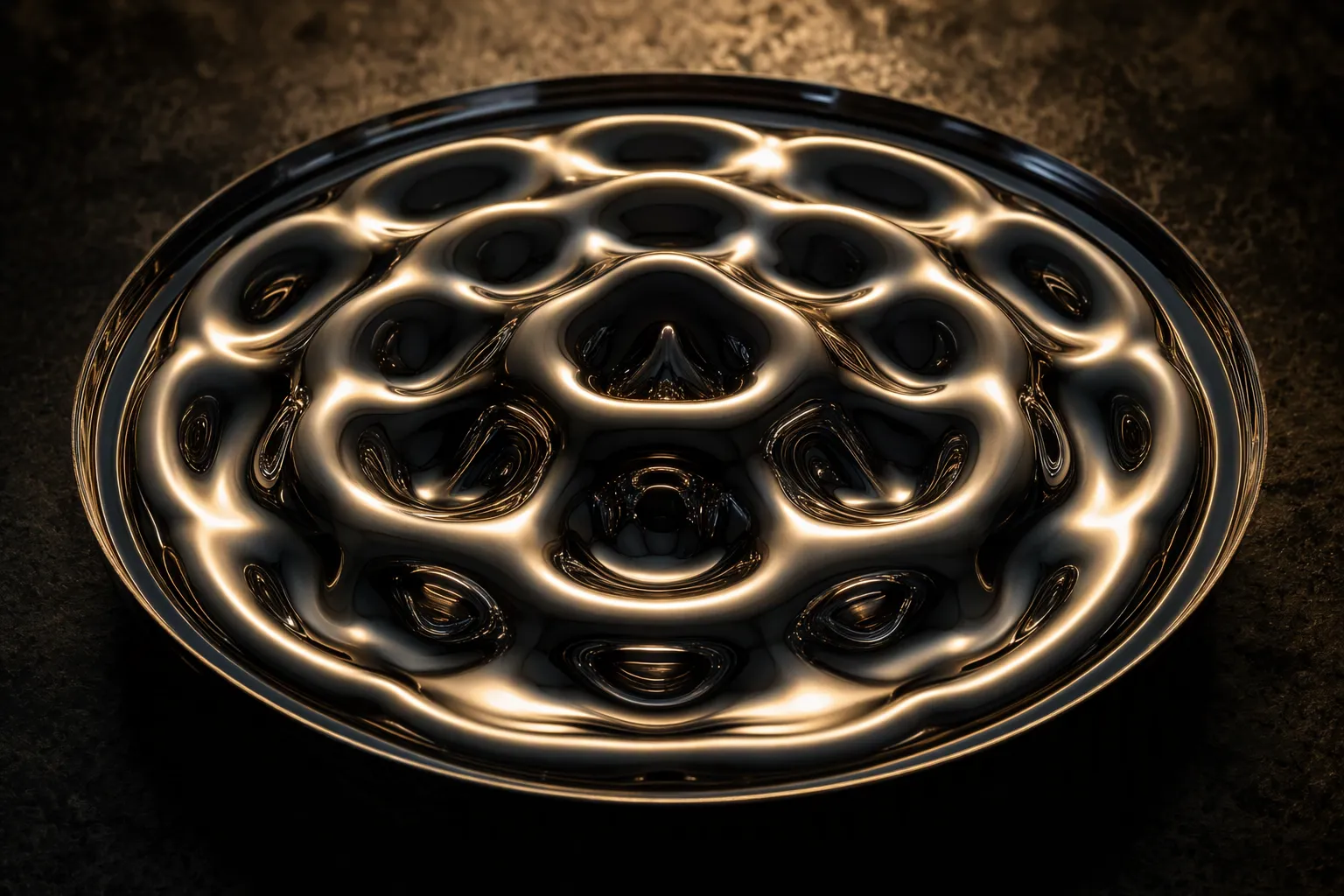
Among the five primary electroencephalographic (EEG) frequency bands of the human brain, Theta brainwaves (4–8 Hz) occupy the most fascinating neurobiological frontier. Situated right on the razor’s edge between conscious wakefulness (Alpha, 8–12 Hz) and deep restorative sleep (Delta, 0.5–4 Hz), the Theta band is the electrical signature of hypnagogic insight, emotional memory reconsolidation, deep autonomic recovery, and subconscious neuroplasticity.
Historically, intentionally holding the brain in a stable 4–8 Hz Theta state without falling asleep required decades of Zen or Tibetan meditative training. Today, precision Audio-Visual Brainwave Entrainment (AVE) allows anyone to reliably guide cortical rhythms into the Theta corridor within minutes.
1. What Are Theta Brainwaves (4–8 Hz)?
In clinical neurophysiology, Theta oscillations are slow, high-amplitude sinusoidal waves Cycling between 4 and 8 times per second (Hz). Researchers distinguish between two complementary manifestations of Theta activity in the human brain:
- Hippocampal Theta Rhythms: Generated deep within the limbic system, hippocampal Theta acts as the master clock for episodic memory encoding, spatial navigation, and synaptic Long-Term Potentiation (LTP). During Theta states, the hippocampus dialogues directly with the neocortex to integrate new experiences into long-term architecture.
- Frontal Midline Theta (FmTheta, ~5.5–7.5 Hz): Measured over the anterior cingulate and medial prefrontal regions, FmTheta surges during effortless internal concentration, autonomic parasympathetic shift, and deep meditative absorption.
2. Sub-Bands of the Theta Spectrum: 4 Hz vs. 6 Hz vs. 7.83 Hz
Not all frequencies within the 4–8 Hz corridor produce the same subjective or physiological outcome. Precision mind programming targets specific sub-bands:
| Theta Sub-Band | Target Frequency | Primary Neurophysiological Effect | Ideal Mistikist Use Case |
|---|---|---|---|
| Low Theta | 4.0 – 5.0 Hz |
Deep somatic sedation, transition toward Delta sleep, dream imagery | Pre-sleep insomnia relief and deep physical recovery |
| Mid Theta (Core) | 5.5 – 6.5 Hz (6 Hz) |
Peak Frontal Midline Theta, analytical filter softening, emotional memory reconsolidation | Subconscious mind programming & self-voice affirmations |
| High Theta / Schumann Bridge | 7.0 – 7.83 Hz |
Hypnagogic creative synthesis, intuitive problem-solving, Alpha-Theta crossover | Creative flow, Edison/Tesla hypnagogic ideation, deep stress reset |
Why 6 Hz Is the Gold Standard for Mind Programming
Peer-reviewed EEG entrainment studies consistently highlight 6 Hz as the sweet spot for cognitive and emotional reprogramming. At 6 Hz, the brain remains awake enough for the auditory cortex to comprehend spoken language (such as your recorded affirmations), yet relaxed enough that the prefrontal analytical barrier relinquishes its defensive resistance.
3. How Binaural Beats & Optical Fractals Induce Theta Waves
Because the human eardrum cannot physically detect acoustic air pressure vibrations below 20 Hz, you cannot simply play a raw 6 Hz sound wave through a speaker. Instead, Mistikist uses two biophysically validated mechanisms:
A. Dichotic Binaural Phase Processing
When Mistikist delivers a 200 Hz pure sine carrier to your left ear and a 206 Hz carrier to your right ear via stereo headphones, the Superior Olivary Complex (SOC) in the brainstem compares the phase arrival of both signals. Neurons in the SOC fire at the exact mathematical difference—6 Hz—generating an internal electrophysiological rhythm that propagates upward into the thalamus and cerebral cortex via the Frequency-Following Response (FFR).
B. Photic & Kaleidoscope Visual Entrainment
Simultaneously gazing at Mistikist’s evolving kaleidoscope geometry softly modulates retinal ganglion signaling to the lateral geniculate nucleus (LGN) and primary visual cortex (V1). This dual auditory-visual convergence entrains Theta amplitude significantly faster than audio alone, while preventing the mind from wandering back into anxious Beta thoughts.
4. Famous Pioneers of the Theta Hypnagogic Window
Long before modern EEG headsets, history’s most prolific inventors and thinkers engineered manual ways to harvest the 4–8 Hz Theta state:
- Thomas Edison & Salvador Dalí famously napped holding steel balls in their hands above metal plates; the moment they slipped from wakefulness into the 4–8 Hz hypnagogic Theta zone, their muscles relaxed, the ball dropped, and they woke up immediately to record the creative synthesis formed in their Theta mind.
- Nikola Tesla utilized vivid internal visual projection—a hallmark of high-amplitude Theta-Alpha coherence—to test and refine alternating-current turbines in his mind’s eye before building a single physical prototype.
With Mistikist, you no longer need steel spheres or accidental micro-naps; you can dial directly into a stabilized 6 Hz Theta state on demand.
FAQ
Why do I sometimes see vivid colors or memories during a Theta session?
As cortical activity shifts from external Beta vigilance to 4–8 Hz Theta, visual association areas and the hippocampus become highly coupled. This naturally produces hypnagogic imagery—dreamlike geometric patterns, intuitive flashes, and emotional release.
Can listening to Theta waves during the workday make me too sleepy?
A prolonged 4 Hz Low-Theta session can induce drowsiness if you are sleep-deprived. For daytime stress resets or creative work, keep Theta sessions to 5–8 minutes or choose Mistikist’s Alpha (10 Hz) or Gamma (40 Hz) protocols so you emerge refreshed and alert.
How can I test 6 Hz Theta right now on this page?
You can click the + 6 Hz Theta Layer button inside the Voice Reader bar at the top of this article! It uses real-time stereo Web Audio synthesis (200 Hz Left / 206 Hz Right) so you can experience gentle Theta binaural entrainment while listening to or reading this guide.